Gravel roads in a hire car: what to check before you leave
Many of the world's great road trips include gravel. Here is how to read the hire terms, check the car and drive unsealed roads without damage or drama.
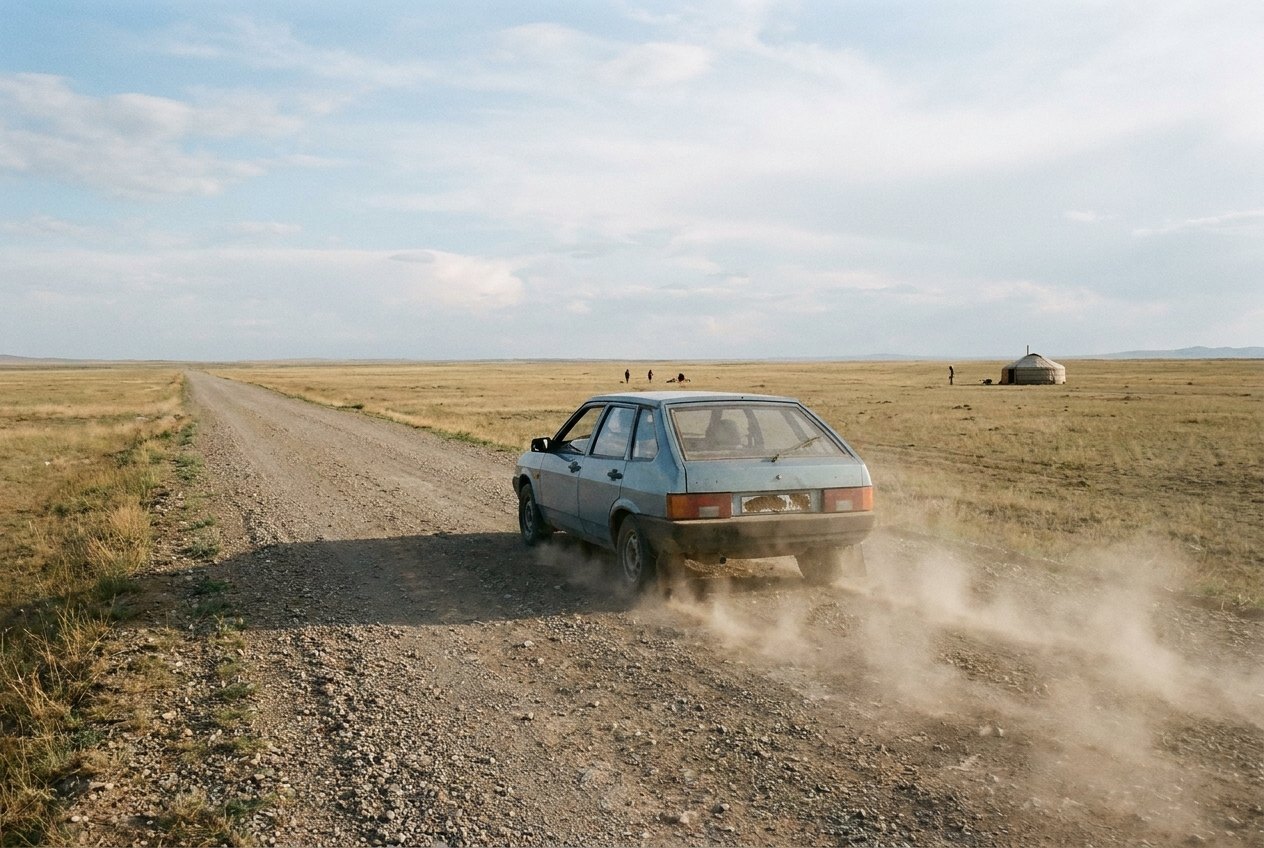
Some of the best roads on this site are partly unpaved. The Carretera Austral has long stretches of gravel, sections of Ruta 40 are still unsealed, Iceland's side roads are mostly gravel, and in many countries the turn-off to a lake, a trailhead or a farm stay leaves the asphalt behind. A normal car can usually handle them in good conditions, but a hire car brings rules and costs of its own. Here is what to check before you leave the desk.
Reading the hire contract
Many hire contracts say something about unsealed roads, and it is easy to miss. Some ban them outright, some allow them but exclude damage that happens on them from the insurance, and some exclude particular kinds of damage wherever it happens: tyres, windscreens, the underside of the car, and sometimes the paintwork.
Read the terms carefully before you sign, and ask at the desk if something is not clear. Look for:
- whether unsealed roads are allowed at all, and whether particular roads or regions are excluded;
- whether tyre, windscreen and underbody damage is covered by the insurance you are buying;
- whether extra cover for gravel or glass is offered, and what it costs;
- whether you may take the car on a ferry or across a border.
In some countries, separate gravel or windscreen cover is common because chips are so frequent. Whether it is worth it depends on how much gravel you plan to drive and on what your excess would be.
Checking the car before you go
Walk around the car before you drive off and photograph any existing damage, including chips in the windscreen, scrapes under the bumpers and the state of the tyres. Make sure it is noted on the paperwork.
Then look at the spare. A full-size spare is far better than a narrow space-saver, which is meant for short, slow distances on paved roads. Check that the spare is inflated, and that the jack and wheel brace are in the car and that you know how to use them. Some cars come with only a repair kit and a compressor, which will not fix a sidewall cut from a sharp stone.
Tyre condition matters on gravel. Worn tyres puncture more easily, and tyres with good tread grip better on loose surfaces. If the tyres look tired, ask for a different car.
If you are heading somewhere with long stretches of gravel and few towns, read our notes on fuel and distance as well: the two problems tend to come together.
Detour · stop 14Where the next pump is 300 km awaySpeed, grip and washboard
Gravel gives you much less grip than asphalt, especially on bends, on loose surfaces and going downhill. Slow down well before corners, brake gently and in a straight line, and avoid sudden steering. On a loose surface the car takes longer to stop and can slide sideways if you brake hard in a bend.
Many gravel roads develop a loose ridge of stones in the middle and along the edges. Drive in the wheel tracks where the surface is firmer, and be careful moving across a ridge, which can pull the car sideways. If you have to move to the edge to pass, slow down first.
Washboard, also called corrugations, is a series of ripples across the road that shake the car hard. Some drivers speed up to skim across the tops, but that reduces grip and steering. The safer choice in a hire car is to slow down, accept the vibration and take breaks.
Potholes fill with water after rain and can be deeper than they look. Go around them where you can, and slow right down where you cannot.
Dust, trucks and passing
On dry gravel, every vehicle trails a cloud of dust that can hide oncoming traffic, potholes and the edge of the road. Drive with your headlights on so others can see you. If you are following another vehicle, drop back until you are out of its dust.
Passing trucks and buses throw up stones as well as dust, and this is how most windscreens get chipped. When a large vehicle approaches, slow down and move as far to your side as is safe. Some drivers press a hand against the inside of the windscreen to reduce the chance of a crack spreading, but slowing down is what really helps.
Overtaking on gravel is risky because of the dust and the loose stones. Only do it on a long, clear straight, and give the vehicle you are passing plenty of room.
Weather, water and when to turn back
Rain changes gravel roads completely. Some turn to slippery mud, some wash out where streams cross, and clay surfaces can become impassable for an ordinary car. If the road ahead looks bad, wait or turn back. In Iceland, roads marked as mountain roads, the F-roads, need a 4x4 and open only in summer, and fording rivers in a hire car is usually excluded from any cover.
Wind, ice and snow add further problems at altitude and in the far south. Check road reports before you set out.
Where this matters most
You will meet gravel on many of the drives on this site. The Carretera Austral in Chile has long unpaved stretches, ferries and few towns. Parts of Ruta 40 in Argentina remain gravel, especially in the north. In Iceland, the Ring Road is paved, but many of its side roads are not.
Plan shorter days on gravel than you would on asphalt, and leave time for a puncture. A calm, slow drive is the best insurance there is.
The photographs on this stop are credited, with their licences, on who took the road photos.