Switching sides: driving on the left for the first time
Driving on the left feels strange for an hour and natural within a day. Here is how to manage the switch, from the hire desk to your first roundabout.
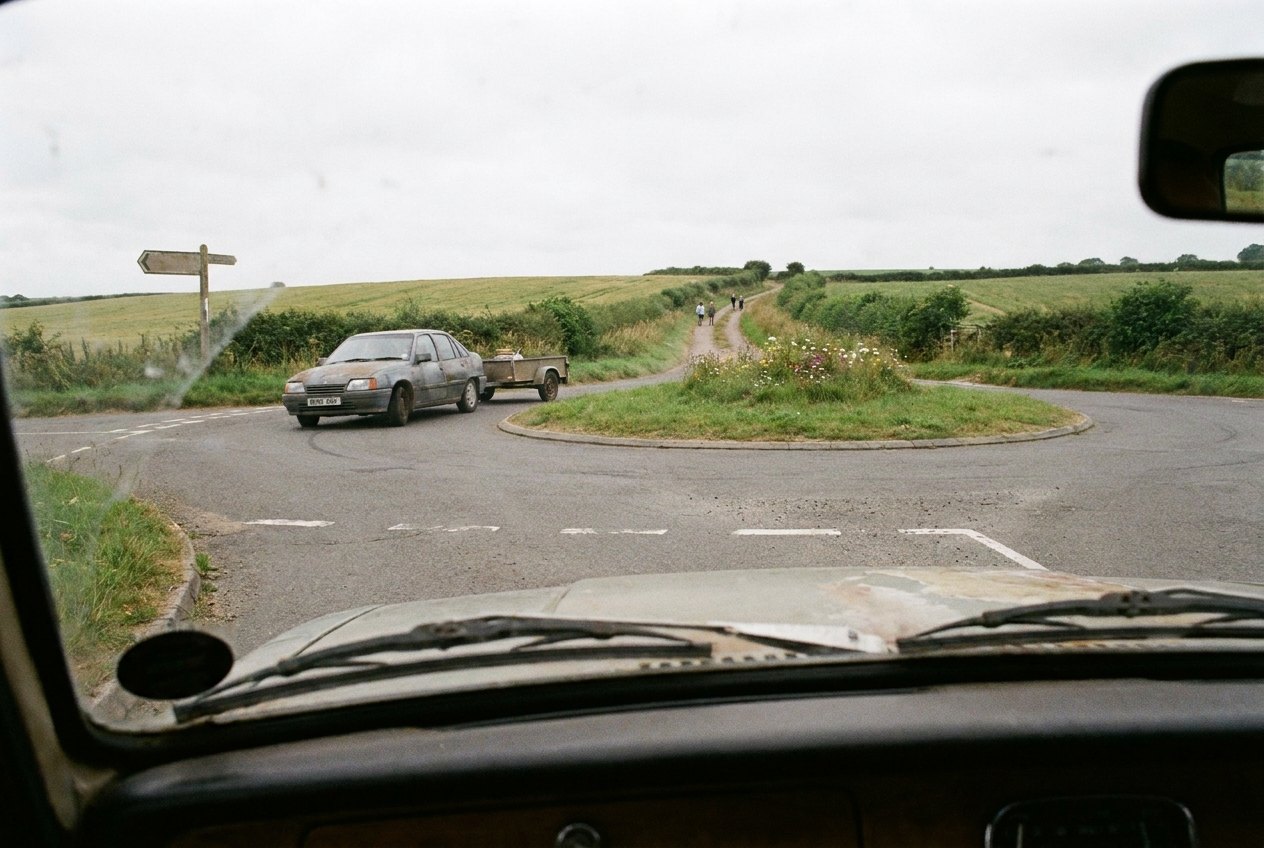
About 75 countries and territories drive on the left, including the United Kingdom, Ireland, Australia, New Zealand, South Africa, Japan and India, as well as many smaller places. Several of the great drives on this site are among them: the North Coast 500 in Scotland, the Garden Route in South Africa, the Great Ocean Road in Australia and the Milford Road in New Zealand.
If you have only ever driven on the right, the first hour can feel awkward. The good news is that most drivers adapt within a day. The trick is to make that first day as easy as possible.
Where you sit and what changes
In a country that drives on the left, the steering wheel is on the right of the car. That puts you, the driver, next to the centre line of the road, and that is the single most useful thing to remember. Whatever the road, the driver stays by the middle. If you find yourself with the verge right beside you, you have drifted to the wrong side.
The pedals are in the same order as you are used to: accelerator on the right, brake in the middle, clutch on the left. But in a manual car the gear lever is on your left, so you change gear with your left hand. The pattern is the same, but it takes some getting used to.
The indicator and wiper stalks are often swapped too, depending on where the car was made. Expect to switch on the wipers when you meant to signal a few times. Nobody minds.
New drivers also tend to drift toward the left edge of the road, because they misjudge where the left side of the car is. Watch the left mirror for the first few hours and leave plenty of room for parked cars and kerbs.
Choosing the car
If you normally drive a manual, consider hiring an automatic for your first trip on the left. Removing the gear changes leaves your mind free for the road, the junctions and the signs. Automatics can cost more and may need to be reserved early in some countries, but the difference in stress is large.
A smaller car also helps, especially on narrow roads. And if you are travelling with a passenger, ask them to watch for the turns and remind you to keep left at junctions and when pulling out.
Many first-timers try left-hand driving on a gentle coastal road, and the Great Ocean Road in Australia is a good example, with slow speeds and frequent places to stop.
Detour · stop 03The Great Ocean Road, a memorial you can driveRoundabouts and junctions
Roundabouts are where most people worry, and with reason. In a left-driving country you go round them clockwise, and you give way to traffic already on the roundabout, coming from your right. Look right as you approach, wait for a gap, then turn left onto the roundabout. Stay in the correct lane for your exit, and signal left as you leave.
At junctions, the dangerous moment is the turn across traffic, which here is a right turn. You have to cross the oncoming lane, so wait for a clear gap and then turn into the left side of the new road. A left turn is the easy one: you stay close to the kerb.
The most common mistake comes after a stop. When you pull out from a petrol station, a car park or a quiet side road with no traffic to follow, your instinct may take you onto the right. Say it out loud if it helps: keep left.
Pedestrians, cyclists and one-lane roads
Pedestrians in left-driving countries look right first when they cross, and you should do the same when you walk. Visitors are often hit stepping out after looking the wrong way. When you are driving, expect people to step out from the left side of the road.
On narrow roads, the same principle applies: keep left. On single-track roads, such as those in the Scottish Highlands, use the passing places on your left, or wait opposite one on your right so the oncoming car can pull into it. Never park in a passing place.
Cyclists ride on the left edge, so you overtake them on the right, giving them as much room as you would a car.
Planning your first day
- Pick up the car rested, not after a long overnight flight, if you can.
- Sit in the car for a few minutes and find the lights, wipers, indicators and gears.
- Start on quiet roads rather than straight onto a motorway or into a city centre.
- Plan a short first day, with a destination that is easy to find.
- Keep your phone on a mount and your route loaded before you set off.
- Stop every hour or so to rest your concentration.
Expect to feel tired sooner than usual. Driving on an unfamiliar side takes more concentration, especially at junctions, and tiredness brings old habits back.
Rules that vary by country
Every country that drives on the left has its own rules on speed limits, alcohol, mobile phones, headlights and documents. Some require an international driving permit alongside your licence. Check the rules for the country you are visiting before you go, and read the hire contract for any extra conditions.
At the hire desk, ask for a quick look around the car before you leave: where the lights and wipers are, how the gearbox works, and whether the car has any driver aids you are not used to. Some airports and hire depots put signs at the exit to remind visitors to keep left. Take them seriously.
Speed limits are usually signposted in kilometres per hour, but in the United Kingdom they are in miles per hour, and distances on signs are in miles. If your hire car's speedometer shows both, make sure you are reading the right scale.
The photographs on this stop are credited, with their licences, on who took the road photos.