The Milford Road, Te Anau to the edge of the sea
About 120 km of State Highway 94 through Fiordland, from Te Anau up the Eglinton Valley and through the Homer Tunnel to Milford Sound, with no fuel on the way.
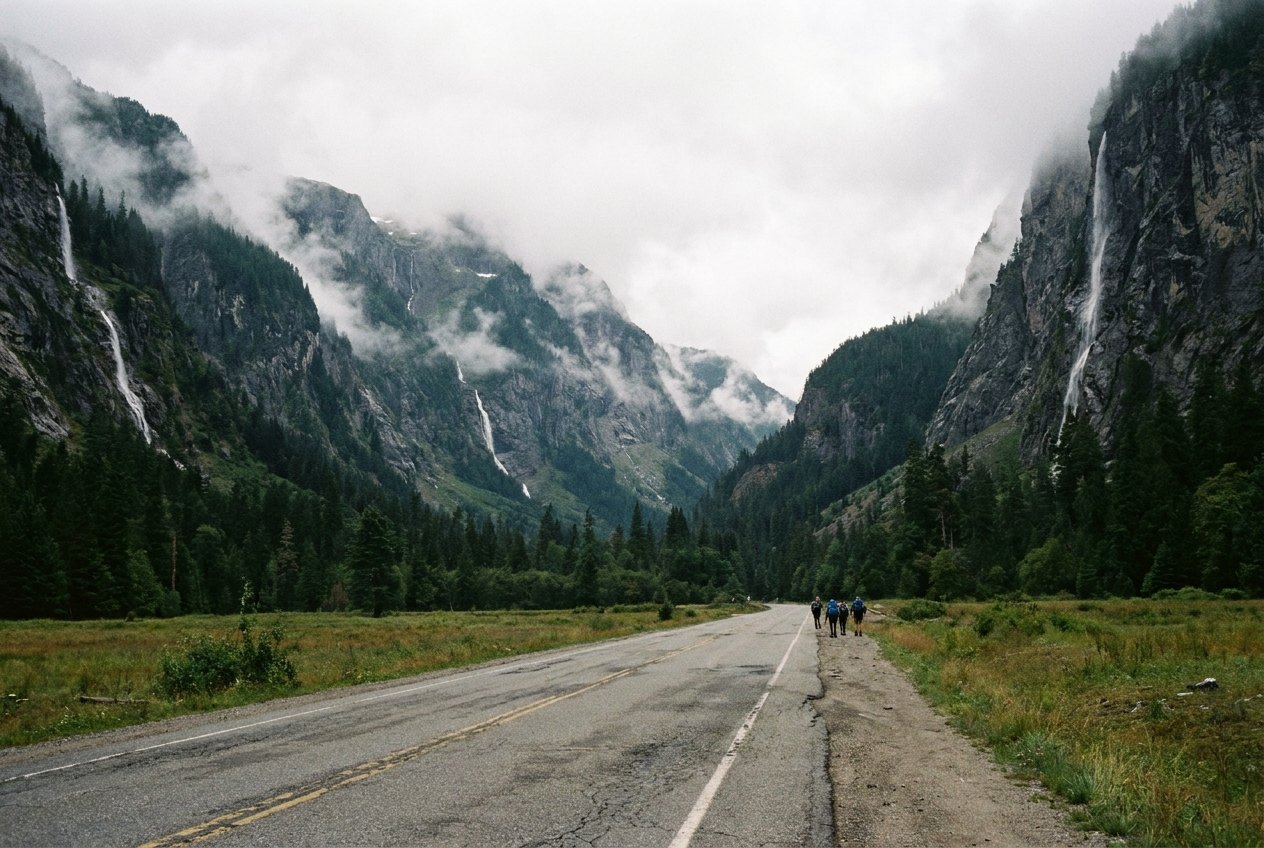
One road in, the same road out
The Milford Road, State Highway 94, is the only road to Milford Sound, the fiord in the far south-west of New Zealand's South Island. It runs about 120 km from Te Anau, through Fiordland National Park, and stops at the water. There is no loop and no other way out by car: you drive back the way you came, about 240 km in a day, or stay a night at one end.
Driving time is a little over two hours each way without stops, but nobody does it without stops. Plan on a full day, and start early. Coaches from Te Anau and Queenstown fill the road and the car parks from late morning to early afternoon, and the boat terminal is at its busiest around midday. Leave Te Anau soon after first light and you get the valley to yourself, the calmest water at the lakes and an easier wait at the tunnel. New Zealand drives on the left, and the road is full of visitors, many of them new to that; read the notes on driving on the left if you are one of them.
Fill up in Te Anau
There is no fuel on the Milford Road after Te Anau. Fill the tank in town before you leave, even if it looks most of the way full, because the drive there and back plus any detours uses more than you expect, and climbing to the tunnel burns more still. The same goes for food and water: there is very little on the road. The notes on fuel and distance explain how to plan for roads like this.
Phone coverage stops soon after you leave town and does not come back until you return. Tell someone where you are going, and know that in an emergency you may need to drive to help or flag someone down.
The Eglinton Valley and Mirror Lakes
From Te Anau the road follows the lake shore north, then turns inland into the Eglinton Valley. The valley floor is flat and open, golden tussock grassland between walls of beech forest, with the mountains rising steeply behind. It is one of the gentlest stretches of the drive and a good place to slow down; there are pull-outs and short walks into the forest.
Mirror Lakes are small, still ponds beside the road, with a boardwalk along the edge. On a calm morning the mountains across the valley reflect upside-down in the water. Wind or rain spoils the effect, which is another reason to start early.
Further on, Knobs Flat has toilets and a small shelter, and Lake Gunn has a short loop walk through mossy beech forest to the water's edge. Pull fully off the road at every stop: the highway is narrow, many of the bends are blind, and campervans and coaches take up most of the lane.
Detour · stop 03The Great Ocean Road, a memorial you can driveThe Divide and the Homer Tunnel
Beyond Lake Gunn the road climbs to The Divide, a low saddle and the start of well-known walking tracks, then drops into the Hollyford Valley and climbs again towards the head of the valley. Here the mountains close in on every side, sheer granite walls streaked with waterfalls after rain, and the road heads straight at the rock.
The Homer Tunnel takes it through, about 1.2 km long, cut by hand and machine and opened in 1953. It is a single lane controlled by traffic lights for much of the year, and the waits can be long in summer. Inside it is rough-walled, often wet and steeply graded, falling towards the Milford side. Lights on, keep your speed low, and stay well back from the car in front.
Keas, the green alpine parrots of the South Island, often wait at the tunnel entrance. They are clever, curious and endangered, and they will chew rubber window seals, wiper blades and anything left on the roof. Do not feed them: human food harms them and teaches them to stay near traffic.
Avalanche season and chains
The road crosses many avalanche paths between The Divide and Milford, and in winter and spring the risk is real. During that season some stretches are signed as no-stopping zones: drive through them without pulling over, even for a photograph. The road is closed at short notice when the risk is high, and may stay closed for days after heavy snow.
In the colder months you may also be required to carry snow chains and fit them when signs tell you to. Check the current road status and any chain rules with the national road agency before you leave Te Anau, every day, not just once.
Rain, sandflies and Milford Sound
Fiordland is one of the wettest places on earth, and rain is normal. Do not let it put you off: in heavy rain, hundreds of waterfalls pour off the cliffs, and the drive is spectacular in its own way. But rivers rise fast, slips can close the road, and visibility can drop sharply. Drive to the conditions.
The road ends at the head of Milford Sound, with Mitre Peak rising straight out of the water across the fiord. Boat trips go out to the open sea from the terminal; book ahead in summer. The sandflies here are fierce, so cover up and use repellent. On the way back, allow time for the short walk to The Chasm, where the river has cut smooth bowls in the rock. And if you like the feeling of a road climbing into high mountains, the Icefields Parkway in Canada offers the same scale at a slower pace.
The photographs on this stop are credited, with their licences, on who took the road photos.