The shoulder months for every road on the page
The weeks either side of high season often bring quieter roads, softer light and easier booking. Here is how the timing works on each of the drives on this site.
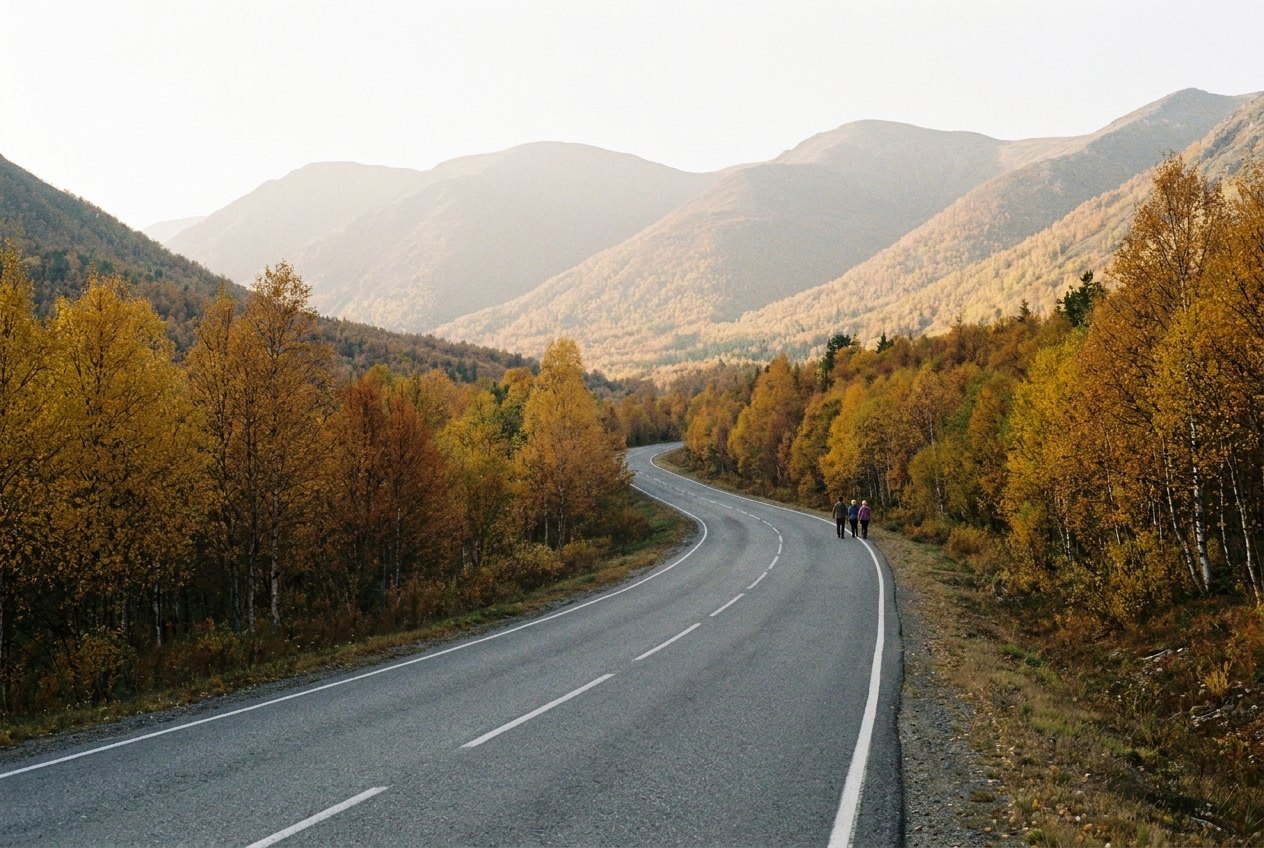
Every road on this site has a high season, and for most of them it is the obvious time to go: the roads are open, the weather is at its kindest, and everything is running. It is also when the roads are busiest and when places to stay fill up and cost the most.
The shoulder months, the weeks either side of the peak, are often a better choice. The roads are quieter, the light is lower and softer, and you can be more flexible. The trade-off is shorter days, more changeable weather, and services and ferries that may be on reduced timetables or closed. Here is how that works road by road. Opening dates, ferry timetables and closures change from year to year, so check before you go.
The northern hemisphere roads
For the roads in Europe and North America, the shoulder months are usually May and June, and September and early October.
- Iceland's Ring Road. Summer brings long days and open highland roads, but also crowds. May and September are quieter, though the F-roads into the highlands are usually closed then. Snow and strong winds are possible at any time outside summer.
- The Atlantic Road. Open all year, and autumn storms are part of its appeal. May, June and September bring long days without the summer traffic.
- The North Coast 500. May and September are good choices, with fewer campervans on the single-track roads. The midges are worst in high summer.
- The Transfăgărășan. The high section is usually open only in the warmer months, roughly from early summer to autumn. The early and late weeks of the season are quieter, but snow can close it at short notice.
The North American roads
- The Icefields Parkway. Late May to June brings snow on the peaks and wildlife in the valleys, though some lakes stay frozen into early summer. September is crisp and quieter. From about November winter tyres are required and services close.
- Highway 1 through Big Sur. April and May bring green hills and wildflowers, while September and October often have the clearest weather. Winter storms bring the landslides that close the road.
Fuel planning matters more in the shoulder months, because some stations keep shorter hours or close out of season.
Detour · stop 14Where the next pump is 300 km awayThe southern hemisphere roads
South of the equator the seasons are reversed. The shoulder months are usually October and November in spring, and March and April in autumn.
- The Garden Route. Mild for much of the year. The December and January school holidays are the busiest time, so spring and autumn are quieter.
- The Great Ocean Road. Summer weekends and school holidays bring heavy traffic. March to May and September to November are calmer.
- The Milford Road. Open all year, but in winter and spring there is avalanche risk, and the road can close or require chains. March and April are often settled.
- The Carretera Austral. The season is short. November and March are quieter than the peak months, but ferries may run less often and some services close.
- Ruta 40. In Patagonia, November and March to April are quieter, with strong winds in spring. In the northwest, autumn and spring avoid the summer rains.
Crowds, holidays and light
School holidays shape the crowds as much as the weather does. In Europe, July and August are the peak, with the roads and campsites busiest in the middle of that stretch. In North America the summer holiday runs from late June to early September. In the southern hemisphere, the long summer break falls around Christmas and January, and Easter brings a shorter rush in both hemispheres.
The light is the other reason to travel either side of summer. At high latitudes, in Iceland, Scotland and Norway, midsummer nights barely get dark, which is useful for long days but means the softest light comes late in the evening. By September the sun sets at a sensible hour, the colours are lower and warmer, and on clear nights in the far north you may see the northern lights. In Patagonia, autumn turns the beech forests red and gold, and the wind usually eases after the spring gales.
Wildlife follows the seasons too. Animals are often easier to see in spring and autumn, when they come down to the valleys, and some coastal places are known for seasonal arrivals such as whales or seals. Ask at visitor centres what is around when you plan to visit.
What changes in the shoulder months
A few things are worth knowing whatever the road.
- Days are shorter. Plan shorter driving days, and avoid driving at night on remote roads.
- Weather is less settled. Snow, storms and strong winds are more likely. Leave a spare day in your plan.
- Services are reduced. Some fuel stations, cafes and places to stay close or keep shorter hours.
- Ferries run less often. On roads with ferry links, check the timetable for the dates you plan to travel.
- Prices are often lower. Places to stay and hire cars can cost less outside the peak.
Picking the months
If you want the safest bet, go in high season and book early. If you want quieter roads and are happy to be flexible, the shoulder months usually bring the best balance. And if you are driving in winter, choose a road that stays open, check the rules on tyres and chains, and give yourself plenty of time.
Checking the road on the day
Road conditions, opening dates, ferry timetables and fees change from year to year. Before you set out, check the current status of the road with the relevant road authority or park, and check again on the morning you drive.
The photographs on this stop are credited, with their licences, on who took the road photos.